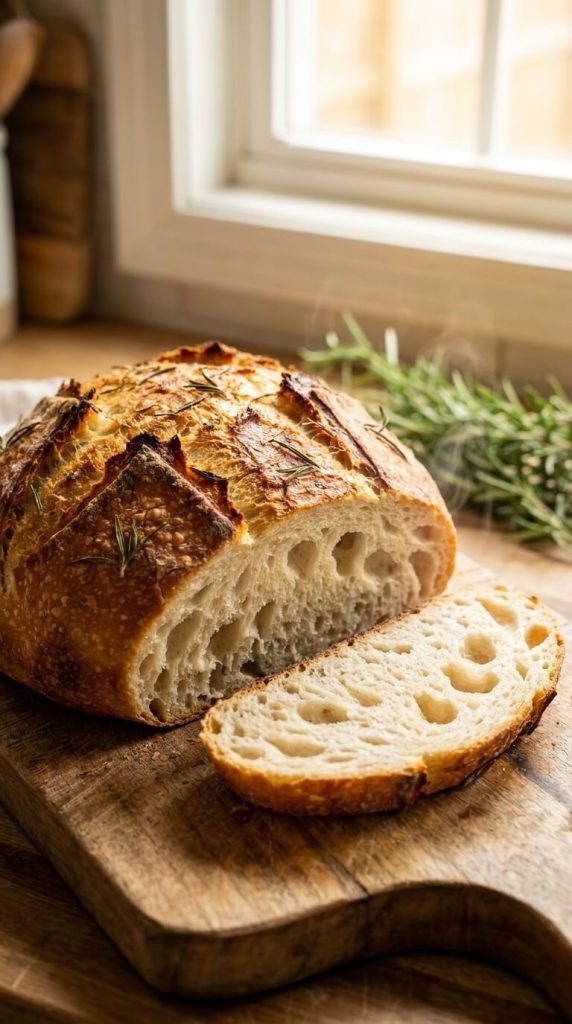
This is a rustic free-form loaf with a blistered golden crust, open irregular crumb, and fragrant fresh rosemary — exactly like the steaming bread in your photo.
Ingredients (1 large loaf)
- 3 cups (360 g) bread flour (or all-purpose flour)
- 1½ tsp salt
- 1 tsp instant yeast (or 1¼ tsp active dry yeast)
- 1½ cups (355 ml) lukewarm water
- 2–3 Tbsp fresh rosemary leaves, roughly chopped (plus extra sprigs for topping)
- 1–2 Tbsp olive oil (optional, for extra flavor and softness)
- Extra flour for dusting
Instructions
- Mix the dough
In a large bowl, whisk together the flour, salt, and yeast.
Stir in the chopped rosemary.
Add the water and olive oil (if using). Mix with a wooden spoon or your hand until a shaggy, sticky dough forms. No heavy kneading needed. - First rise
Cover the bowl tightly and let the dough rise at room temperature for 2–3 hours (or up to 12–18 hours in the refrigerator for better flavor) until doubled, bubbly, and jiggly. - Shape
Lightly flour a work surface. Gently turn the dough out and shape it into a round boule (or oval) by folding the edges toward the center.
Place it seam-side down on a piece of parchment paper. Cover loosely and let rest 30–60 minutes until puffy. - Preheat the oven
Place a Dutch oven (or heavy pot with lid) in the oven and preheat to 450°F (230°C) for at least 30 minutes. - Score & bake
Just before baking, dust the top of the dough lightly with flour. Using a sharp lame or knife, score a cross, square, or diamond pattern on top. Press a few fresh rosemary sprigs into the surface.
Carefully transfer the dough (on the parchment) into the hot Dutch oven. Cover with the lid.
Bake covered for 25–30 minutes.
Remove the lid and bake another 15–20 minutes until the crust is deep golden and blistered. Internal temperature should reach about 205–210°F (96–99°C). - Cool
Transfer to a wire rack and cool at least 45–60 minutes before slicing so the crumb sets.
Tips for the best results
- High hydration (sticky dough) creates the large open holes — resist adding extra flour.
- Fresh rosemary is best; dried can be used (about 1 Tbsp) but the flavor is milder.
- Baking in a Dutch oven traps steam for the classic crisp, blistered crust.
- For even better flavor, do the long cold rise overnight in the fridge.
- Best eaten the same day. Store cut-side down or freeze slices.
This produces the rustic rosemary artisan loaf with the exact crust, crumb, and aroma shown in your photo. Enjoy it warm with butter or olive oil!