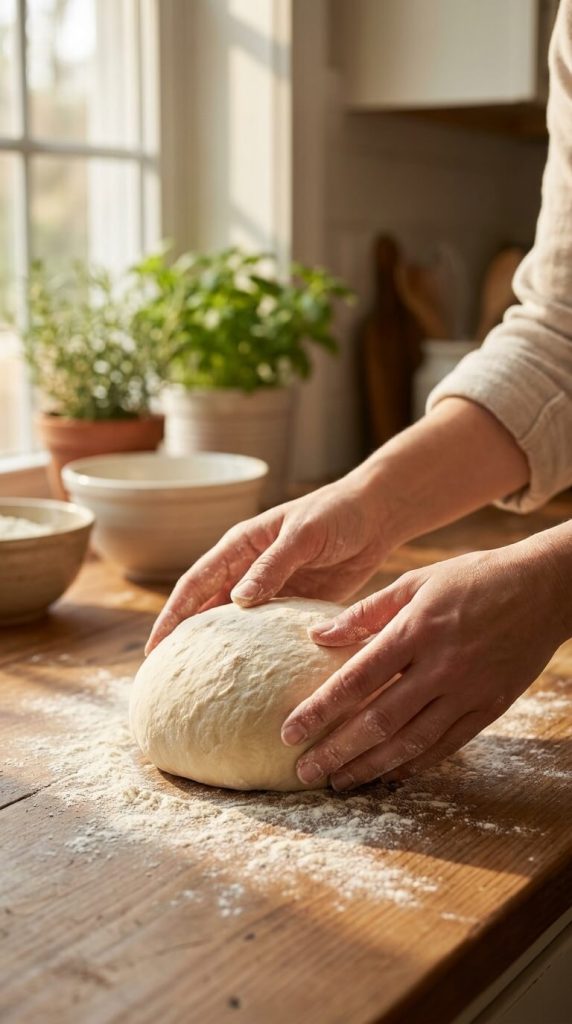
This recipe produces a smooth, elastic, easy-to-stretch dough exactly like the one being shaped in your photo. It makes enough for 2 large pizzas (or 3–4 personal ones).
Ingredients
- 3¾ cups (450 g) bread flour or all-purpose flour (plus more for dusting)
- 1½ tsp salt
- 1 tsp instant yeast (or 1¼ tsp active dry yeast)
- 1½ cups (355 ml) lukewarm water (about 100–110°F / 38–43°C)
- 1–2 Tbsp olive oil (optional, for a slightly richer dough)
Instructions
- Mix the dough
In a large bowl, whisk together the flour, salt, and yeast.
Add the water and olive oil (if using). Stir with a wooden spoon or your hand until a shaggy dough forms. - Knead
Turn the dough out onto a lightly floured surface and knead for 8–10 minutes until it becomes smooth, elastic, and slightly tacky (it should pass the windowpane test — you can stretch a small piece thin enough to see light through it without tearing).
Alternatively, use a stand mixer with a dough hook for 6–8 minutes. - First rise
Place the dough in a lightly oiled bowl, turn to coat, cover, and let rise in a warm spot for 1–1½ hours until doubled in size.
(For better flavor, you can refrigerate it for 24–72 hours after the initial mix or after the first rise.) - Divide and shape
Gently deflate the dough and divide it into 2 equal balls (or more for smaller pizzas).
Shape each piece into a tight, smooth ball by folding the edges underneath. Place on a floured surface, cover, and let rest 20–30 minutes so the gluten relaxes. - Stretch and use
On a floured surface, press and stretch each ball into a round (or use your knuckles/ fists as shown in the photo). Avoid using a rolling pin if you want a light, airy crust.
Top as desired and bake in a very hot oven (450–500°F / 230–260°C) on a preheated pizza stone or steel for 8–12 minutes, until the crust is golden and blistered.
Tips for the best dough
- Bread flour gives better chew and structure; all-purpose works well too.
- The dough should feel soft and slightly sticky — resist adding too much flour.
- Cold fermentation (in the fridge) develops deeper flavor and makes the dough easier to handle.
- Leftover dough balls can be frozen for up to 3 months; thaw in the fridge overnight.
This is a reliable, classic pizza dough that matches the smooth, stretchable ball in your photo. Enjoy your homemade pizza!