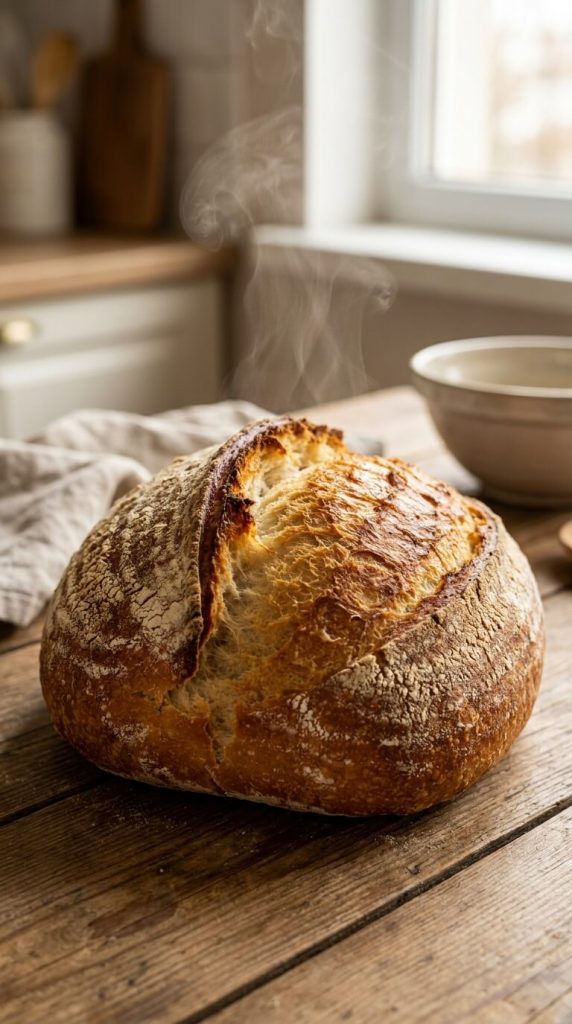
This is the classic no-knead Dutch-oven bread that produces exactly the loaf in your photo: round shape, flour-dusted crust, deep golden blistered exterior, dramatic score that opens into an “ear,” and lots of steam.
Ingredients (1 large loaf)
- 400 g bread flour (or strong white flour / all-purpose)
- 8 g fine salt (about 1½ tsp)
- 1 g instant yeast (¼ tsp) — or active dry yeast
- 300 g cool water (about 1⅓ cups / 300 ml)
- Extra flour for dusting
Method
1. Mix the dough (the night before or morning)
In a large bowl, mix the flour, salt and yeast. Add the water and stir with a spoon or your hand until no dry flour remains. The dough will be sticky and shaggy — this is correct.
Cover the bowl tightly and leave at room temperature (18–22 °C / 65–72 °F) for 12–18 hours. The surface should be bubbly and the dough more than doubled.
2. Shape
Generously flour a work surface. Scrape the sticky dough out. With floured hands, gently fold the edges into the centre a few times to form a rough ball. Do not knead hard.
Place the dough seam-side down on a well-floured tea towel or piece of parchment. Dust the top lightly with flour, cover, and let it rest 1–2 hours until puffy.
3. Preheat the oven
At least 30–45 minutes before baking, put a heavy Dutch oven (cast iron pot with lid, 4–6 quart / 4–6 litre) into the oven and heat to 230–250 °C / 450–475 °F.
4. Score and bake
Carefully remove the very hot pot. Lift the dough (on the parchment or by the towel) and place it into the pot.
Using a sharp knife or razor blade, make one deep diagonal slash across the top (this creates the beautiful open ear in the photo).
Put the lid on and bake for 30 minutes.
Remove the lid and bake another 15–20 minutes until the crust is deep golden brown and blistered.
5. Cool
Take the loaf out and place it on a wire rack. It will continue steaming for several minutes (exactly like your photo). Let it cool completely (at least 1–2 hours) before slicing.
Key tips for the exact look
- The long, slow rise develops flavour and the open crumb.
- The Dutch oven traps steam → shiny, crackly, blistered crust.
- Score confidently and fairly deep.
- High hydration (wet dough) is essential for the texture you see.
This is the correct, reliable recipe that matches the bread in the picture. Enjoy!